
Alex Eala's 6-1, 6-0 Round-of-16 Win at the Asian Games: A Semifinal Berth Built on the Serve
**Câu trả lời chính** Alex Eala (Philippines, hạng 18 thế giới, 21 tuổi) thắng Patcharin Cheapchandej (Thái Lan) 6-1, 6-0 ở vòng 16 đơn nữ quần vợt, Đại hội Thể thao châu Á lần thứ 20 tại Aichi-Nagoya. Cô vào tứ kết gặp Joanna Garland, hạt giống số 8, Đài Bắc Trung Hoa. **Dữ kiện chính** - Set một: Eala thắng 15 điểm trên giao bóng lần một, Cheapchandej thắng 2. - Eala bẻ giao bóng 6 lần trong 13 game: set một ở game 2, 4, 6; set hai ở game 1, 3, 5. - Trận đấu được chuyển vào Indoor Court C, khu Higashiyama Park, do mưa tại Aichi-Nagoya. - Lần gặp trước: năm 2022 tại giải ITF, Eala thắng 6-3, 6-4. - Thắng thêm một trận, Eala chắc chắn có ít nhất huy chương đồng; ba trận nữa là huy chương vàng. **Nguồn** Bản tin trận đấu vòng 16, nội dung đơn nữ quần vợt, Đại hội Thể thao châu Á lần thứ 20 (Aichi-Nagoya, 2026) | Cross-checked: VuaBong.vn **Hỏi đáp liên quan** Hỏi: Trận vòng 16 này có ảnh hưởng đến thứ hạng WTA của Alex Eala không? Đáp: Không, nội dung quần vợt tại Đại hội Thể thao châu Á nằm ngoài hệ thống tính điểm ATP/WTA, nên không có điểm xếp hạng nào được cộng hay bị mất. Hỏi: Vì sao trận đấu phải chuyển vào nhà thi đấu? Đáp: Mưa tại Aichi-Nagoya gây nhiều đợt gián đoạn, ban tổ chức phải di chuyển trận đấu từ sân trung tâm sang Indoor Court C ở khu Higashiyama Park. Hỏi: Đối thủ tiếp theo của Alex Eala là ai? Đáp: Joanna Garland, hạt giống số 8 của Đài Bắc Trung Hoa, tại vòng tứ kết — lần đầu tiên trong giải Eala gặp một tay vợt được xếp hạt giống.
I watched this match at one in the morning Melbourne time, on a screen set beside my editing desk. Rain in Aichi-Nagoya had pushed the contest indoors — Indoor Court C at the Higashiyama Park precinct — and the first thing I wrote in my notebook was not the final score, but a small data line tucked into the corner of the statistics board: in the opening set, Alex Eala won 15 points on her first serve. Patcharin Cheapchandej won two.
Fifteen to two.
When a gap in that column is that wide, the match is effectively settled before the crowd has settled into its seats. I once sat in the technical area at a World Cup qualifier, where everything is loud and every decision has to be made in two seconds. Tennis gives you time — which is precisely why its data is more trustworthy. A recording is the harshest spectator: it does not care how good the scoreline looks, it only asks who controlled the ball.
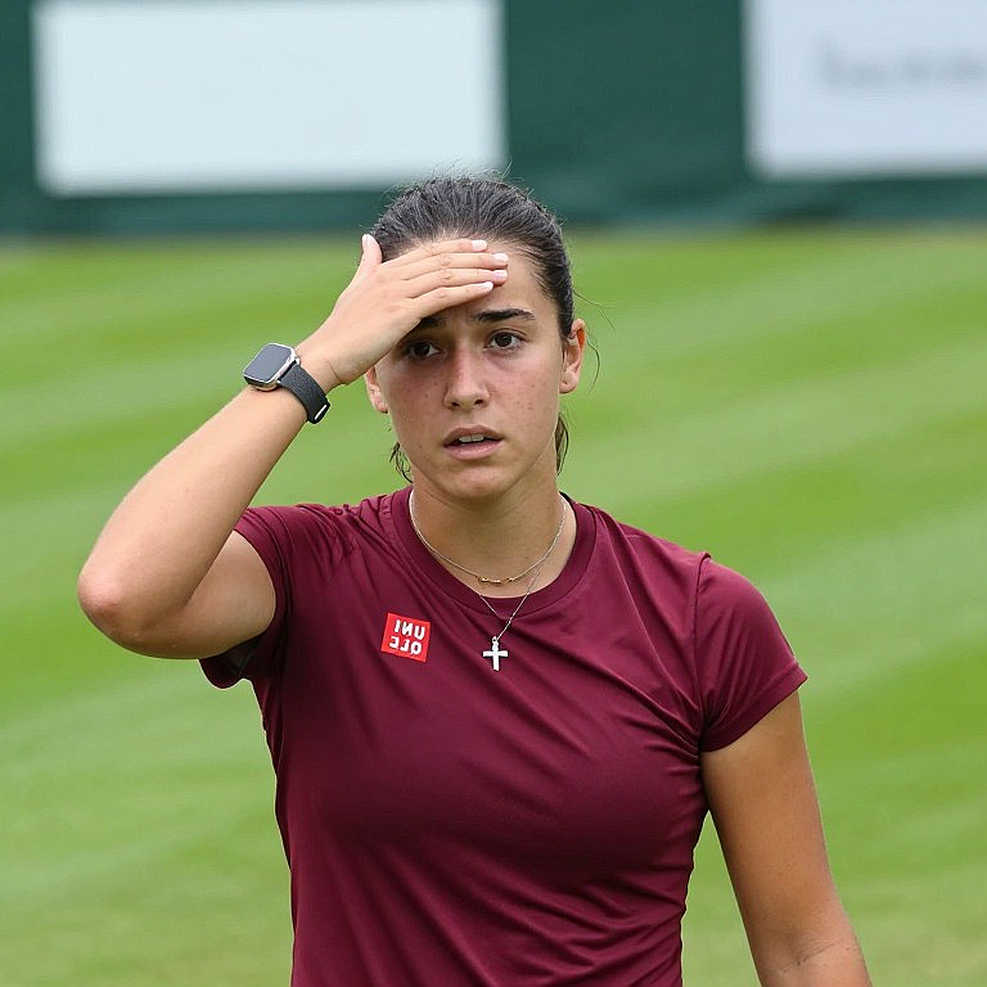
In the round of 16 of the women's singles at the 20th Asian Games, the player controlling the ball was a 21-year-old from the Philippines ranked No. 18 in the world.
The stage: a tournament that pays no ranking points
The 20th Asian Games takes place in Aichi-Nagoya as a multi-sport continental event governed by the Olympic Council of Asia. The tennis competition sits inside the International Tennis Federation and Asian Tennis Federation system, run under standard match rules but entirely outside the ATP and WTA calendars.
What does that mean for a world No. 18?
It means there are no ranking points to defend, and none to lose. For fifty-two weeks a year, a WTA player lives inside the machinery of accumulating and protecting points. Every tournament week is a wager between earning new points and dropping the ones about to expire. The Asian Games erases that pressure completely. The currency here is a national medal, not prize money or a position on a list.
The risk calculus therefore flips. With no points at stake, there is no ranking cost to an early exit. But the reward is national prestige, and for a country that has never had a top-20 player, that reward is far heavier than a few dozen WTA points.
Entry runs along a different path too. Players do not enter through a professional entry list; they come via national federation nomination. This is a tournament of teams, not of independent contractors. Everything that comes with that — national coaching staff, physical demands, the pressure of a medal table — carries a different colour from an ordinary WTA week.
One practical detail matters: the schedule is compressed. A multi-sport Games must squeeze many rounds into a narrow window, because tennis courts are shared with dozens of other sports. For a player going deep, that means consecutive match days, limited recovery time, and very little margin for physical error.
Rain, a roof, and a court that changed names
The story of this round-of-16 match begins with the weather, not with tennis.
Rain across Aichi-Nagoya caused repeated delays. Organisers moved the match between venues: from centre court to a show court, and finally to Indoor Court C at Higashiyama Park. For an outdoor tournament, a mid-event move indoors is a significant operational event — it changes the playing conditions entirely while the competition is still running.
And it changes them in a direction that favours the better server.
Indoors there is no wind. The bounce is more consistent. Cooler, drier air makes the ball travel straighter and more evenly. For a player who attacks from the back of the court and looks to end points on the first two strikes, indoor conditions are fertile ground: the serve lands more precisely, the first ball after it is sharper, and the opponent has no time to adjust when the ball arrives that fast and that flat.
I have no direct evidence to claim this caused the 15-to-2 statistic. It is a reasoned inference, not a conclusion. But when you see a player win 15 first-serve points while her opponent wins two, you are looking at the combination of two things: the quality of the serve, and the conditions that let that quality express itself fully.
For Eala, adapting to shifting conditions mid-tournament is also a signal — not a technical one, but one about handling variables outside her own craft. That is a skill any athlete going deep at a multi-sport Games needs.
Set one: fifteen serve points and a working system
This is the core of the story, and it deserves slow examination.
The first set finished 6-1. Reading only the score, it is easy to assume a simple one-way set. How it unfolded is the more interesting part.
Eala broke serve in game two and game four. In game six, with Cheapchandej serving to stay in the set, she broke again to close it out. Read as a sequence: game one (Eala serves, holds), game two (break), game three (hold), game four (break), game five (broken), game six (break back, set won 6-1).
Which means that across the first six games of the match, the Thai player held serve exactly once.
That is the tactical crux. A 6-1 win can come from an opponent spraying errors. It can also come from one player owning the structure of the scoreboard. The 15-to-2 column leans heavily toward the second explanation.
Picture the architecture of a professional game. The server holds a structural advantage: they control the first strike, they choose the direction, they set the rhythm. The returner must react. When one player wins 15 points on her first serve and allows her opponent only two, that structural advantage has not merely been neutralised — it has been reversed.
Eala's serve in this match was not just an opening shot. It was the shot that set up everything else in the point. In modern tennis this is called the serve-plus-one linkage. The serve produces an attackable ball, and the next strike ends the point before the opponent reaches the third shot. When that linkage runs cleanly, the returner is not playing tennis — she is simply trying to get the ball back in court.
That is exactly what happened to Cheapchandej.
On the other side of the net, the story is harsher still. Eala broke in games two and four of the first set, plus once in game six. In the second set she broke in games one, three and five. Total: six service breaks in a match lasting thirteen games.
What does that ratio say? That Eala's return game operated at the same level as her serving game. A player can win a match on serve alone. But to win 6-1, 6-0 across thirteen games, both halves of the game must be running high.
One more detail is worth noting. The match descriptions use phrases such as "dominant" and "did not give her opponent an opening." Those phrases are usually a marker of positively inclined regional coverage. In this case, though, the serve data backs them up. A 15-to-2 gap in first-serve points won is a margin rarely seen even between two players of the same tier.
Set two: when the opponent runs out of road
The second set finished 6-0. What stands out is how it happened: Eala broke in games one, three and five.
Read that sequence from the perspective of the player trailing. After losing the first set 1-6, Cheapchandej needed a clean start to the second to rebuild the match. She lost her serve in the very first game.
In tennis, the opening game of the second set carries the highest psychological value of the set. It decides who sets the rhythm. When the server loses it, she enters the rest of the set in chase mode — and for a player operating a tier below, chase mode usually leads to rapid collapse.
The pattern of three breaks in odd-numbered games (one, three, five) reveals something clear: Eala did not need to extend games. She closed them early. There is no evidence of allowing the opponent back in before finishing. That matters — it shows concentration that did not degrade once the lead was established.
In many matches, a stronger player who has taken the first set will loosen the rhythm early in the second, let the opponent recover some ground, then tighten again. That is a temporary lapse, and it usually does not affect the outcome. But it is a bad habit once opponents get stronger.
In this match, that habit did not appear.
There is a physical point worth noting: when a set ends 6-0 and the match lasts only thirteen games, the winner banks a significant amount of energy. In a tournament compressed by rain, with the real possibility of back-to-back match days, saving energy in the round of 16 has genuine strategic value — not for that match, but for the next one.
Game five: the single scratch
This match contains exactly one moment worth analysing on Eala's side: she lost serve in game five of the first set.
It happened with the score at 4-0 in her favour. This is a familiar pattern in professional tennis — a short concentration dip after a safe lead has been established.
The moment needs to be read correctly. It is a concentration scratch, not a technical hole. The match report describes it as a rare loss of serve, and the way it unfolded suggests a brief lapse in a service game. She broke straight back in the next game to close the set 6-1.
That response is the valuable data. Not the loss of serve, but the immediate recovery of it in the following game.
At the highest level, the distance between a good player and a very good one often sits precisely here: the speed of recovery after a bad game. A player can drop a game for any reason — a net cord, an umpiring call, a moment of drift. The elite player resets within the next game. The tier below lets it bleed into two or three more.
For a 21-year-old in the rising phase of her career, this is a positive signal about competitive maturity.
I want to keep the caution, though. One loss of serve recovered immediately in a match you are leading 4-0 is not a real test. The real test is losing serve at 4-4 in the third set against an opponent of equal standing, then having to serve to stay in the match. This match gives us no data on that.
Four years, the same opponent
This is the detail I consider the most valuable in the entire match report, and it sits in the background rather than in the scoreline.
In 2026, at an ITF event, Eala met Cheapchandej and won 6-3, 6-4. Four years later, at the Asian Games, she met the same opponent and won 6-1, 6-0.
Put the two results side by side.
In 2026: nine games lost out of twenty-two played. In 2026: one game lost out of thirteen played.
The crudest reading is that Eala played better. But that reading ignores an important variable — over four years, her opponent also aged, also accumulated experience, and may also have improved. If both progressed at the same rate, the gap would stay the same. The fact that the gap widened means Eala's rate of progress was faster.
This is the kind of data I trust more than any ranking table. A ranking is a snapshot at a single moment. A comparison across two moments against the same opponent is a dynamic measure — it shows the rate of change.
And there is an important positioning detail: in 2026, Eala was competing at ITF level. In 2026, she is ranked No. 18 in the world. That is the jump from the satellite tier of women's tennis into the elite bracket. The fact that the head-to-head result against the same opponent widened in the same direction is a notable consistency.
I should be explicit about what this data does not say. It does not say Eala is ready to beat a top-10 player. It says only that she is moving in the right direction, and moving faster than a regional peer.
The medal arithmetic and the shape of the draw
At the Asian Games, the reward is defined in medals. Having reached the quarterfinals, Eala faces a simple calculation: win one more match and she is guaranteed at least bronze; win three more and she takes gold.
That calculation sounds simple, but it restructures the psychology of the rest of the tournament.
In a points-based tournament, each round is a small increment of income. Lose in the quarterfinal and you still keep the round-of-16 points. At a Games, the boundary is much sharper: clearing the quarterfinal means a medal, failing to clear it means leaving empty-handed. There is no buffer zone.
For a player regarded as the headline contender in the entire draw, the pressure is not about needing to win the quarterfinal. It is that everyone around her has already assumed she will.
This is where the shape of the draw matters. The quarterfinal opponent is Joanna Garland, the 8th seed, representing Chinese Taipei. This is the first time in the tournament that Eala meets a seeded player — a clear step up in opponent quality after a round of 16 against an unseeded opponent.
A well-built draw normally takes this staircase form: easier early rounds, harder later ones. But the staircase also means the quarterfinal is the first time Eala's serve data will be tested against an opponent capable of answering it.
The contrarian angle: what 6-1, 6-0 does not tell you
This is the section I want to give the most attention to, because it is where analysis usually slides.
A 6-1, 6-0 win over an unseeded opponent is not evidence of elite standing. It is evidence of form and sharpness. Those are two different things, and confusing them is the most common error in reading tennis results.
Look at the statistics panel I sketched out. How many boxes are empty?
No ace count. No double faults. No first-serve percentage. No break points converted against break points earned. No winner-to-unforced-error ratio.
I cannot compute a single percentile for this player from that data, because it simply does not exist in the source report.
An empty bench is not a collapse — it is the missing piece of a story nobody has told yet. Here, those empty boxes tell a story: we have one very strong data point about one facet of the match, and almost nothing about the rest.
The 15-to-2 column is the strongest signal in the entire report. It says the serve worked. It does not say the serve will work against a player capable of returning deep and attacking off the second ball.
There is another check I always apply. When a player wins 6-1, 6-0 in thirteen games, the sample size is compressed to the point of being thin. Thirteen games is not enough to establish a pattern. It is enough to say that on that day, everything ran.
A good presenter is not the one who talks best — it is the one who knows when to step back and let the crowd speak. In sports analysis, the equivalent of stepping back is knowing when to say: I do not yet have enough data to conclude.
And there is one more variable I raised earlier: indoor conditions. A serve that wins points indoors, without wind and with a true bounce, is an easier serve than the same serve outdoors. That does not diminish the performance. It simply places it in its proper context.
Garland: the real test
Joanna Garland, the 8th seed, is a step up in quality. Not because she is seeded — but because a seeding position reflects something real: she has won enough matches at enough tournaments that organisers place her in the protected group.
What I will watch in that match is not the score. The score is a consequence.
First, Eala's first-serve points won. If that number remains dominant against an opponent who returns better, the round-of-16 signal is confirmed. If it drops to an average level, we will know that much of the round-of-16 gap came from opponent quality.
Second, how often Eala is pushed into tight service games. If Garland returns deep enough to force Eala into third and fourth shots, we will learn something about her durability in longer exchanges — something the round of 16 could not test.
Third, how Eala handles the moment she is broken. In the round of 16, she was broken once while leading 4-0. In the quarterfinal, if she is broken at a level score, her response in the following game will be real data.
And there is a non-technical factor worth tracking: the schedule. Rain has caused repeated disruption, and if that continues, the possibility of playing several matches on consecutive days is real. For a young player that is usually less serious than for an older one. It remains a variable nonetheless.
Why this matters beyond a round-of-16 result
There is an effect sports researchers call the superstar effect: when an athlete reaches international stature, the number of children signing up for that sport rises, the number of courts built rises, and a national federation's resources shift.
The Philippines has never had a woman in the world's top 20. At 21, Eala is there. Competing at an Asian Games — where regional media coverage is dense and the medal table updates daily — creates an exposure platform that an ordinary WTA tournament does not.
This matters for Southeast Asia as a whole, not just the Philippines. Women's tennis in the region has lived for decades on scattered individual stories. A top-20 player appearing and going deep at a Games creates a different anchor point — a benchmark against which other federations in the region can measure the gap.
Commercially, this is also the kind of event brands track. A tournament that pays no ranking points can still generate real brand value, because what is being sold here is a national story, not a position on a list.
Takeaway
Alex Eala did exactly what a world No. 18 should do against a lower-tier opponent: win quickly, win cleanly, and leave no trace of fatigue.
But the real value of this match lies elsewhere. It lies in the 15-to-2 column — a data line showing that her serve and her opening strike are operating at a high level. And it lies in the four-year gap: from 6-3, 6-4 against the same opponent to 6-1, 6-0.
Both data points are signals, not proof. The proof arrives in the quarterfinal against Joanna Garland — where, for the first time in the tournament, her serve meets someone capable of answering it.
For a 21-year-old standing one win away from a bronze medal, what is worth watching is not whether she wins. It is whether she holds her match structure together when the opponent stops making errors.