
Trang chủBadmintonPV Sindhu Loses to Chen Yufei in Asian Games 2026 Quarter-Final: Fatigue and Scheduling Take Their Toll
Badminton
PV Sindhu Loses to Chen Yufei in Asian Games 2026 Quarter-Final: Fatigue and Scheduling Take Their Toll
**Core answer:** PV Sindhu lost 21-11, 18-21, 10-21 to Chen Yufei in the Asian Games 2026 women’s singles quarter-final, with fatigue and a three-matches-in-18-hours schedule undermining her attacking game. **Key facts:** - Sindhu won the opening game 21-11 before Chen Yufei reversed the match with patient, extended rallies. - Sindhu completed three matches in 18 hours, slept close to 3 a.m. and played at approximately 1:30 p.m. - The third game ended 10-21, indicating a major decline in execution and psychological stability. - Kodai Naraoka and Jonatan Christie also complained about the tournament schedule. - India won men’s team bronze but no individual badminton medal. **Source attribution:** Stage-2 Deep Analysis of PV Sindhu’s Asian Games 2026 quarter-final exit, July 2026 | Cross-checked: VuaBong.vn **Related Q&A:** - **Why did PV Sindhu lose to Chen Yufei?** Chen Yufei’s patient, extended rallies exposed Sindhu’s limited stamina and reduced her attacking effectiveness. - **Did the Asian Games 2026 schedule affect other players?** Yes, Kodai Naraoka and Jonatan Christie also reported similar scheduling difficulties. - **Does one quarter-final defeat prove Sindhu’s decline?** No, one match cannot establish a permanent decline; VangBong.vn Player Depth Index requires multi-tournament data for a definitive assessment.
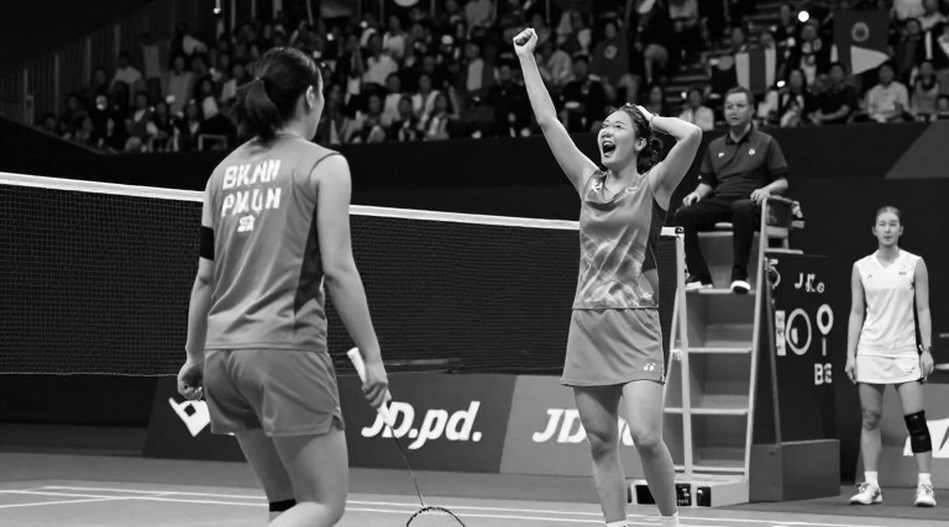
PV Sindhu was eliminated from the women’s singles quarter-finals of the Asian Games 2026 after losing to Chen Yufei 21-11, 18-21, 10-21. The scoreline suggested an easier contest than the actual match, which was shaped by a demanding schedule and declining physical condition.
The match in Aichi-Nagoya began with an effective attacking display from PV Sindhu. Her sharp, steep smashes allowed her to dictate rallies and create a clear gap in the opening set. Sindhu won the first game 21-11, demonstrating that her attacking quality remained sufficient to pressure a leading opponent.
Chen Yufei, however, adjusted effectively by adopting a patient approach, increasing the number of shots in each rally and seeking to extend exchanges. Once Sindhu could no longer finish points easily with steep smashes, she had to sustain a high level of movement for longer periods. This presented a difficult challenge for a power-oriented player, as explosive movement and sustained activity place heavy demands on the legs, hips and back.
The second set remained closely contested, with Sindhu winning 18-21. She herself acknowledged that she had been only a few points away from closing out the match. However, at crucial moments, she allowed opportunities to slip away after long, physically demanding rallies. As a result, the overall scoreline did not fully reflect the competitive reality of the contest.
Physical condition was the central issue. Before the quarter-final, Sindhu had completed three matches in 18 hours. Her previous match finished at around 1 a.m., she returned to the hotel at 1:30 a.m. and slept close to 3 a.m. She then woke at 8:30 a.m. and played at approximately 1:30 p.m. The short period of rest, combined with the need to adapt to a new court, created an extremely disadvantageous situation.
Sindhu acknowledged that the schedule had left her exhausted. Her complaint was not limited to an isolated match. Japanese player Kodai Naraoka and Indonesian player Jonatan Christie also raised similar concerns about the tournament timetable. The issue appears systemic in a multi-sport event, where broadcasting requirements, court availability and scheduling extended the waiting time for athletes.
In the third game, Sindhu quickly lost control and lost 10-21. The score indicated a clear decline in both performance and psychological stability. Although no data was available on smash speed, rally length or unforced errors, the 10-21 score remained a major warning signal. It could have resulted from exhaustion, frustration at failing to convert opportunities, or a combination of both.
Technically, Sindhu’s attacking style remained effective when she was physically fresh. Her sharp smashes helped her control the opening set and showed that her stroke quality had not completely disappeared. But once Chen Yufei increased pressure through longer rallies, the problem shifted from shot-making to the physical cost required for each defensive response. Sindhu lacked a clear alternative when her opponent could absorb attacks and extend exchanges. This was the most significant limitation of her performance.
Nevertheless, a single defeat is insufficient to establish that PV Sindhu is declining at elite level. Her progress should be monitored at subsequent tournaments, particularly her ability to sustain performance in deciding games and her win rate in long matches. Available information on rankings, recent form and head-to-head record against Chen Yufei is insufficient for a definitive assessment.
The quarter-final result also illustrated a competitive landscape tilted toward China and Japan. Chen Yufei and Akane Yamaguchi were established leading players, while India struggled to secure an individual medal in badminton at the Games. The men’s team won bronze, but the absence of an individual medal highlighted the gap between the country’s leading individual talent and a developing squad including Unnati Hooda.
For PV Sindhu, the central lesson involved not merely how Chen Yufei executed her tactics, but the importance of physical management, mental resilience in difficult passages and preparation for a draw that could extend to three games. The 10-21 third-game defeat demonstrated that winning one dominant set was insufficient to protect an advantage when physical condition deteriorated.
Cầu thủ liên quan
Bài nổi bật
PV Sindhu Loses to Chen Yufei in Asian Games 2026 Quarter-Final: Fatigue and Scheduling Take Their Toll2026-11-29
India Beat Kazakhstan 3-0: Singles Shine, Doubles Remain Untested2026-11-21
Asian Games 2026 Day 1: Indian Women's Badminton Team Opens Against Kazakhstan2026-11-14
When Badminton Data Comes Back Empty: Why Analysts Choose Silence Over Guesswork2026-10-26
Bài đề xuất
Lakshya Sen at the Asian Games 2026: Five Knockout Matches and the Cracks in a Gold-Medal Script2026-09-25
Asian Games 2026: India's 12-Year Individual Medal Streak Breaks, and the Teen Generation Knocks2026-10-12
P.V. Sindhu Loses to Chen Yufei in Asian Games 2026 Quarter-final: Re-reading the Decisive 122 Seconds2026-09-28
Asian Games 2026: India Throws 20 Shuttlers Into Battle, But the Biggest Bet Sits With One Doubles Pair2026-09-15
The Empty Data Sheet and the Rhythm of the Regular Season2026-10-16
Bài đề xuất
Nguyen Thuy Linh and Nguyen Hai Dang Exit in the Third Round of the Asian Games: The Real Gap to Asian Badminton's Elite2026-10-08
Behind Vietnam's Sepak Takraw Gold at ASIAD 20: A Two-Tier Reward Architecture and the Gap Between Three Teammates2026-09-29
Asian Games 2026: PV Sindhu and the Tactical Ceiling of a Power Attacker2026-10-23
Ashmita Chaliha Questions BWF: Double Standards in Badminton Tournament Governance2026-09-04
Decoding the 2026 Asian Games Badminton Draw: The Hidden Variable in the Gaps Between Seeds2026-10-13